
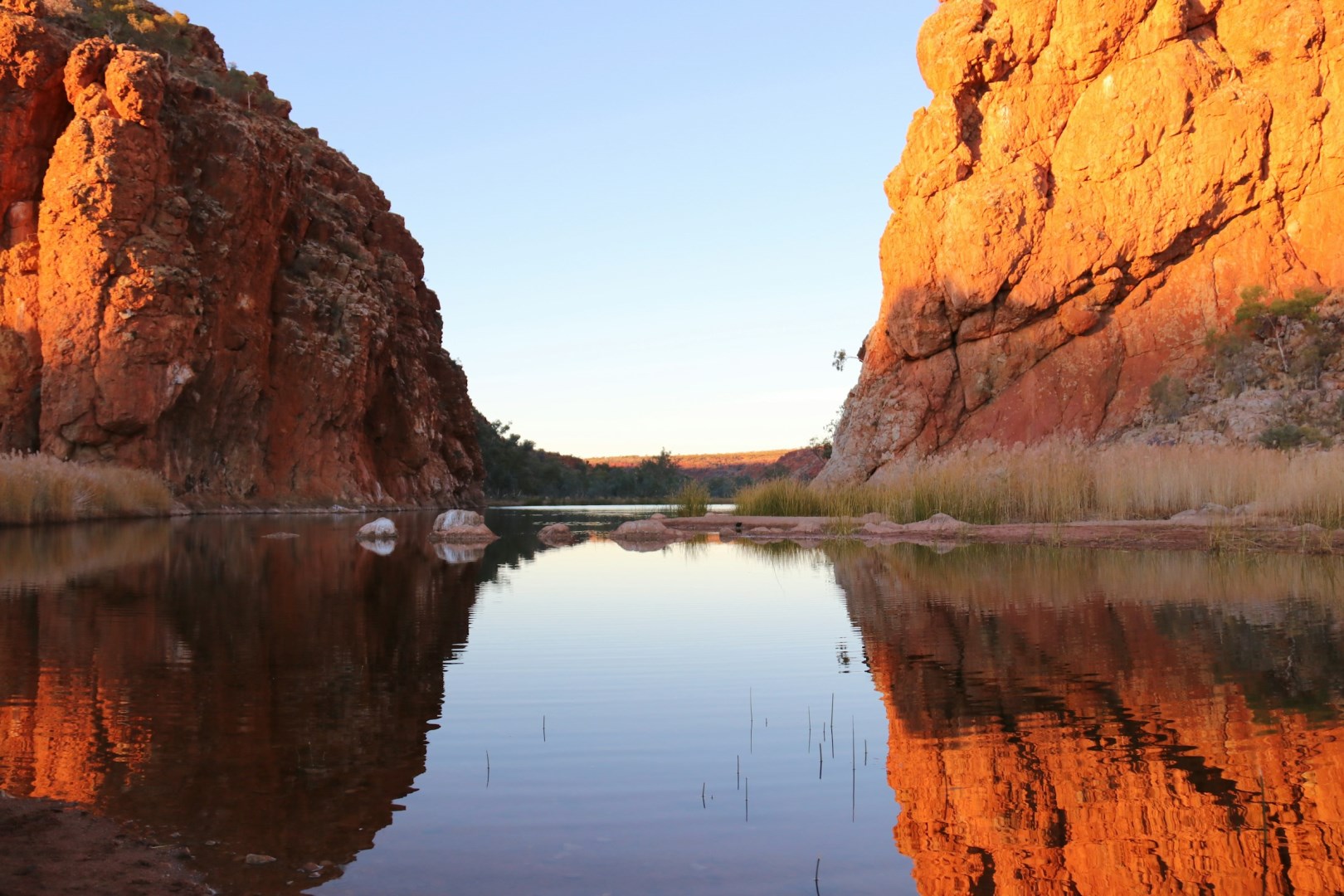
Tjoritja / West MacDonnell National Park lies west of Alice Springs in the Northern Territory, extending for about 161 kilometres along the rugged West MacDonnell Ranges. The park is known for red quartzite ridges, steep-sided gorges, dry riverbeds, and permanent waterholes that provide important refuges for plants and animals. Its landscapes are part of a much older geological setting shaped by erosion and changing climates. Tjoritja is the Western and Central Arrernte name for the MacDonnell Ranges, and the name reflects the continuing Aboriginal connection with the country protected within the park.
The park is located on the traditional homelands of the Central Arrernte, Western Arrernte, and Luritja peoples, whose cultural knowledge remains closely connected to its mountains, waterholes, plants, and animals. Stories associated with the landscape are part of Aboriginal law and identity, and visitors encounter culturally significant places throughout the park. The Ochre Pits are particularly important, with bands of naturally colored ochre exposed in the hillside. The park is jointly managed with Traditional Owners, incorporating Aboriginal knowledge into the protection and interpretation of the area's cultural and natural values.
Several of Central Australia's best-known inland landscapes are found within Tjoritja / West MacDonnell National Park. Simpsons Gap has a narrow opening between high red cliffs and is accessible by road and walking tracks, while Ellery Creek Big Hole contains a large permanent waterhole surrounded by rocky walls. Ormiston Gorge has steep cliffs and a broad gorge system, and Redbank Gorge lies below Mount Sonder, known as Rutjupma. The 231-kilometre Larapinta Trail crosses the park, linking gorges, ridges, waterholes, and viewpoints through a long-distance walking route.
The park's sheltered gorges support plants and animals that are uncommon in the surrounding arid country. Species recorded here include the black-footed rock-wallaby, central rock-rat, long-tailed dunnart, and MacDonnell Ranges cycad. Permanent waterholes such as Ellery Creek Big Hole, Ormiston Gorge, and Redbank Gorge can also provide places for swimming, although the water can remain very cold. Camping is available at designated sites, with facilities ranging from basic bush camps to developed areas at Ormiston Gorge. Visitors need to carry adequate water and prepare carefully for remote conditions, particularly during periods of extreme heat.


